Let’s put an end to the stereotypes! Did you know that Mexican cuisine has been listed as part of UNESCO’s Intangible Cultural Heritage of Humanity since 2010?
To the question, “Is all Mexican food spicy?”, the answer is NO.
But if we take it a step further and ask, “Is the food spicy in Mexico?”, the answer is YES.
It’s a source of national pride. In Mexico, tolerance for chili peppers is almost a symbol of respect. Chili peppers are the soul of our cuisine: they’re eaten fresh, dried, smoked, or pickled. Every dish has its own chili pepper or sauce. The flavors are endless, rich, and complex.
Chili peppers in Mexican culture
Chili peppers are much more than just an ingredient—they’re a cultural staple. Every region has its own signature sauce, and every recipe tells a story. This passion for spice is found in many cultures around the world.
Just for the record, I remember a meal at an Indian restaurant in 2020. I had ordered the spiciest dish on the menu. For me, being used to Mexican flavors, the heat was bearable, since it’s often adapted to European tastes. The chef, feeling a bit stung, decided to test me and prepared an “extreme” version. I’ll admit it: he succeeded in his challenge! But that day, I earned the chef’s respect and left with an excellent sauce for my own cooking.
However, be careful: if your palate isn’t used to it, some tasty dishes can be quite challenging. I don’t recommend trying them right when you arrive. To avoid traveler’s diarrhea or other stomach issues, give your body time to adjust. To help you out, here’s a guide based on a tolerance scale from 0 to 10.
Mexican dishes that aren't spicy
Level 0: Absolute softness
If you can't stand spicy food at all, tacos are your best bet, since the sauce is almost always served on the side. You'll be spoiled for choice:
Cecina or tasajo tacos (typical of Oaxaca).
Tacos with carnitas, breaded fish (pescado capeado), or cactus (nopal).
Enfrijoladas (tortillas with bean sauce) and Huevos revueltos (scrambled eggs).
When it comes to street food, you can’t go wrong with quesadillas, empanadas, sopes, huaraches, tostadas, flautas, pozole blanco, or the famous chiles en nogada.
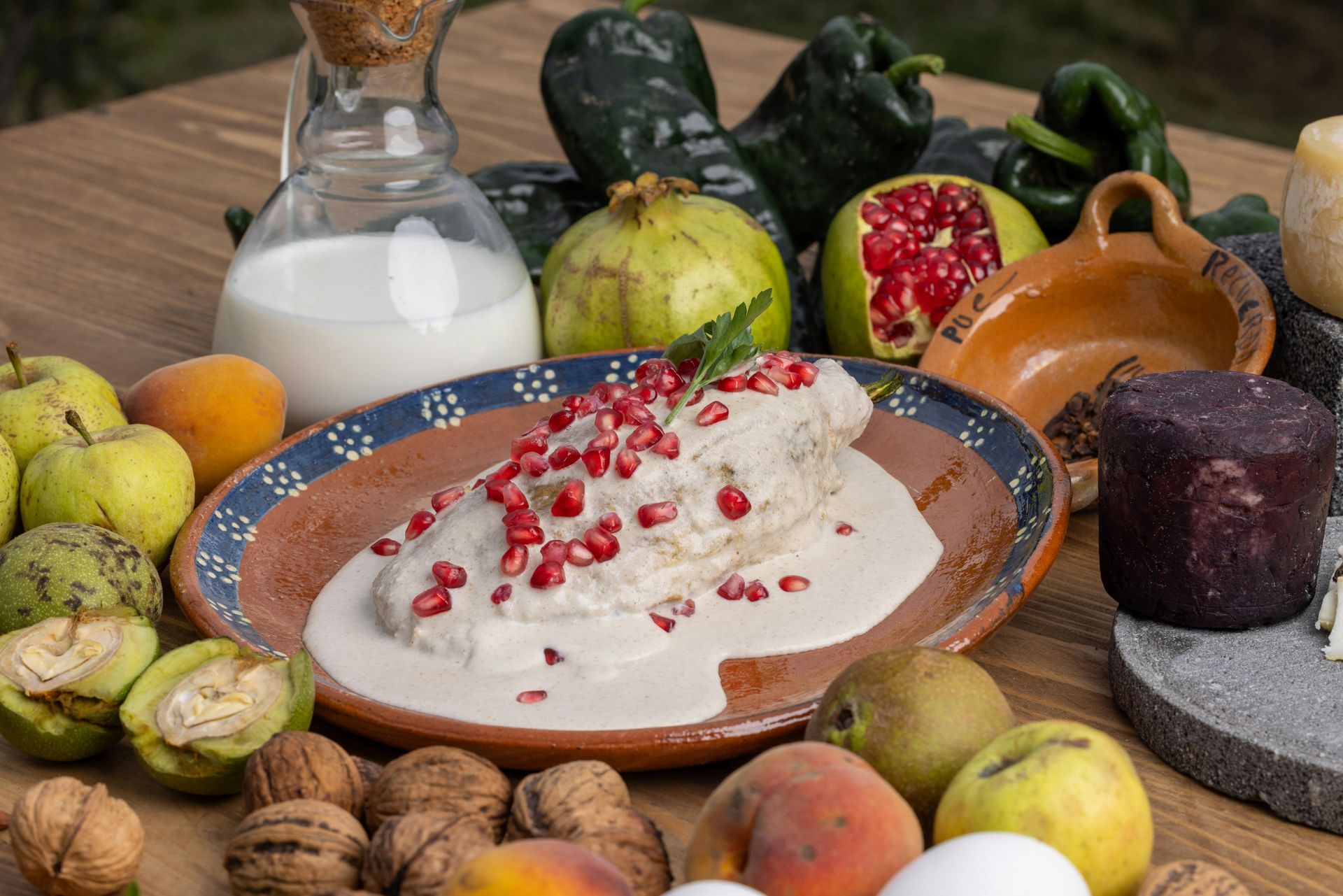
A chile en nogada
Expert tip: If you ask whether a dish is spicy and someone replies, “un poquito” (a little bit), be careful… it might already be too spicy for you!
In our personalized travel guide, we share our recommendations for must-try dishes, restaurants, and bars at every stop along your itinerary.
How can you safely try spicy food for the first time?
To avoid any discomfort right from the start, avoid eating foods that are too fatty or too spicy. Let your stomach get used to this new environment. You might also want to consult your doctor before you leave to get a course of probiotics; that’s a tip I personally use whenever I return to France!
On your first day, stick to milder dishes (pasta, soups, white meats). Take this opportunity to discover the incredible variety of Mexican fruits. Have you ever tried guanábana (soursop) or mamey? If you’re feeling adventurous, give tuna (the fruit of the prickly pear cactus) a try.
Finally, don’t miss out on nopal, my favorite vegetable. For a memorable experience, head to an asadero. At these restaurants specializing in grilled meat, you can enjoy grilled cactus with cheese, onions, guacamole, and fresh tortillas. It’s an absolute treat!
And for thrill-seekers?
If you can handle a spice level of 3 to 5 (moderately spicy dishes), you absolutely must try the tacos al pastor: marinated meat cooked on a spit—a must-try!
If you're looking for a level 5 to 7, give mole negro a try. It's often the mildest of the mole family (these complex sauces made with cocoa and spices), but be warned: this is the realm of bold cuisine, incredibly rich in flavor.
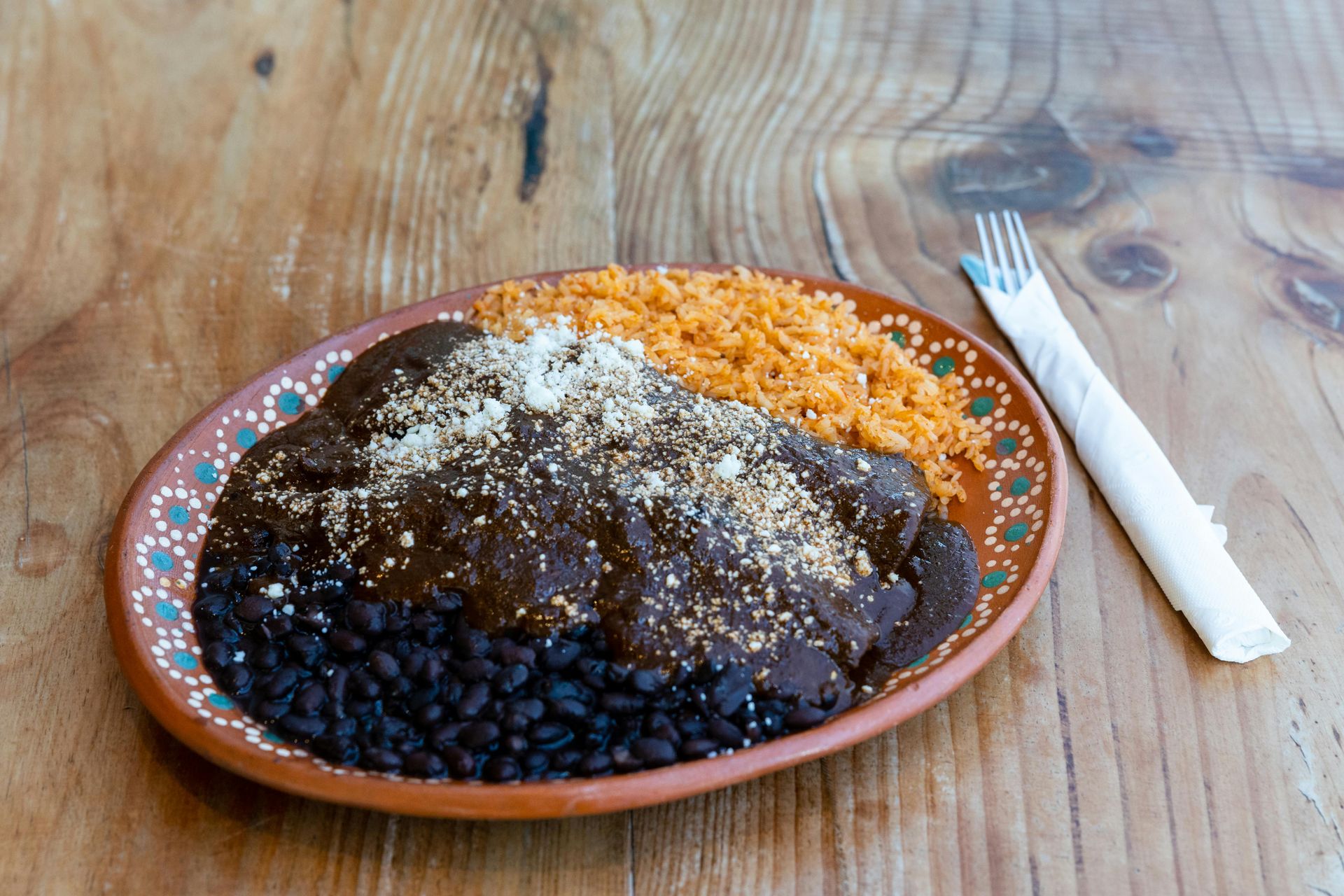
A plate of mole
If your tolerance is higher than 7, the full range of Mexican cuisine is open to you. But remember to take it slowly to spare your stomach.
As a Mexican, let me reassure you: tolerance for chili peppers is a matter of habit and practice. Our cuisine is so vast and nuanced that, no matter your tolerance level, you’re sure to find something you’ll love.
Welcome to Mexico!
Bienvenido a México!
Laura